Tuesday, April 30, 2013

Travel Tuesdays: Out of Many, One

Today, a quotation for your consideration.


 "Holding our country to a high standard and searching for ways to better live up to its lofty ideals is not “America-bashing.” It’s good citizenship… By learning from our travels and bringing these ideas home, we can make our nation even stronger. As a nation of immigrants whose very origin is based in the power of diversity (“out of many, one”), this should come naturally to us…and be celebrated."

                                         Rick Steeves in Travel as a Political Act p. viii


And a reminder that the giveaway ends TONIGHT at midnight EST. Don't miss your chance to win April Pulley's Sayre's newest book, Touch a Butterfly.


To learn how, visit last Tuesday's post, "Author Interview: April Pulley Sayre." 


Friday, April 26, 2013

Nature Weavings

Nature weavings are a great project for children of all ages.

Materials needed:
Yarn, string, or fishing line
A container to carry gathered items (bag, basket, bucket, etc).

Also needed: a natural place to walk where you can collect natural items off the ground. This might be a forest, beach, meadow or some combination of places.

(Be careful of local laws/regulations about collecting. For example, many parks do not allow you to take anything out that you didn't bring in with you).

Directions:

Take a walk in a natural area. Collect small items you find that are beautiful, interesting, or otherwise catch your eye. Examples of items include: pinecones, leaves, driftwood, seed pods, dried grasses, pieces of bark, lichen, small seashells, etc. DO NOT pull plants out by their roots or pull objects off trees, etc. Do not take items that are alive. Make sure shells are no longer occupied.

Caution: As we come into poison ivy season in many regions, be careful not to catch poison ivy. If you have trouble identifying it, I wrote a post about poison ivy identification (with photos) that may be helpful to you.

While you're walking, also look for a Y shaped stick on which to create your weaving. Something the length of an adult arm is a good size for a first weaving. Later, you might experiment with larger or smaller weavings.

When you return, wrap the middle of the Y with yarn like this:

There really is no wrong way to do this, though you may have to double-wrap to prevent the yarn from slipping down the Y. Experiment to see what works best with your stick and yarn.

Then work the items you gathered into the yarn. Long items like grasses can be woven in -over/under/over/under- while shorter, fat items like pine cones will need to be hooked in a way that keeps them secure. I recently found a small nest that had been blown down in a storm. It was banged up and is quite fragile, so I'll need to find a delicate way to secure it.

Here's one our Kindergarten grade friend made:


My kids and I sent one to my sister in California several years ago. She especially loved it because it reminded her of home. (It still hangs on her wall). You might do the same for a far-off relative, or perhaps you could collect items from your next vacation and create a weaving as a souvenir. 

For those of you who collect on the beach- try wrapping fishing line instead of yarn and make yours a beach themed weaving. Sometimes you can find old fishing nets washed up- you can use them too!

Have you ever tried making nature weavings? What are you favorite materials to use?

Related Posts:
Insect Safety
Mystery Rash (Poison Ivy)
Lyme Disease Prevention

Tuesday, April 23, 2013

Author Interview: April Pulley Sayre

Today features an interview with with one of my favorite children's authors- April Pulley Sayre.  April is an award-winning children’s book author of over 55 natural history books for children and adults. Her read-aloud nonfiction books, known for their lyricism and scientific precision, have been translated into French, Dutch, Japanese, and Korean. She is best known for pioneering literary ways to immerse young readers in natural events via creative storytelling and unusual perspectives.

Today is the official publication date for April's latest book, Touch A Butterfly: Wildlife Gardening with Kids.  Welcome, April, and thank you for participating in this interview.

(Be sure to read all the way to the end to learn about a giveaway and to retrieve a discount code for book purchase).

1.       You’re probably best known for your lyrical, non-fiction books for young children. Two of my personal favorites are Vulture View and Bumblebee Queen. What made you decide to write this book for adults about gardening and exploring nature with children?

APS: My husband Jeff and I have been wildlife gardening for the past twenty or so years. So it's part of our daily life. Years ago, we wrote a natural history of hummingbirds (for adults) and used to present workshops about hummingbirds/attracting hummingbirds at botanical gardens, flower and garden shows, and birding festivals. Jeff is an expert in native plants and was director of one of the Midwest's largest native plant nurseries for five years. So our lives are full of these little daily discoveries about what attracts birds, butterflies, and the like.  I wanted to share our knowledge and personal experiences with wildlife gardening. So I proposed an adult book about the topic to a couple of publishers. Roost Books asked me to shift the book toward gardening for families, including activities that might suit families with children. So that is what I did. Last year, Kenn Kaufman, author of many field guides, asked Jeff to co-author a field guide to nature of the Midwest so we’re really immersed in native plant work and photography now!
       
2.        In many of your picture books, illustrations by children’s book illustrators help bring your words to life. Two recent titles, Rah, Rah Radishes! and Go, Go, Grapes! include photographs taken by you. How was the creation of these two styles of books different? 

APS: The word work is the same as with other books. But doing the photos has added a whole new aspect to my work. I've always been a passionate photographer but I've never done it with an eye to an entire book, with a deadline staring me in the face. My recent book photography has involved a lot of experiments. You learn by trying, and often by failing, before you find the right setups, angles, and light.  It's enthralling; I get these brainstorms about new photos and dart around, finding ways to capture them. I just completed Let's Go Nuts: Seeds We Eat. It will be released on August 27th, 2013 by Beach Lane Books, the same publisher that did Rah, Rah, Radishes and Go, Go, Grapes. 

3.        When you submitted your manuscript Touch a Butterfly to your publisher, you provided a variety of photos from which they could choose. Did you follow the same process with Rah, Rah and Go, Go? Or did you select the photos and submit them with your manuscript?

APS: For all three books I gave the publisher sample photographs with my proposal or, in the case of the children’s books, with a full manuscript.  Touch a Butterfly: Wildlife Gardening With Kids is illustrated in full color with my wildlife photography, supplemented by some photos contributed by colleagues, families, and schools who had photos of kids enjoying/studying nature. In fact, several photos were generously donated by the writer of this blog, Michelle Cusolito! Thanks, Michelle!  The publisher chose the final ones for the book from among hundreds I submitted.

4.        How do you approach research for your books? Do you go out into the field? Read books? Search the internet? Other?

APS: I pursue all avenues of research. I read adult science books. I read scientific papers. I do a lot of interviews with scientists. But a lot of the nature books just flow naturally from our goofy, exploratory daily lives. So I spend time studying squirrels or investigating bees. Then, it becomes a picture book. That said, I do a lot of study and word play that never comes to anything. Or, you could say, perhaps not yet . . .

5.        To continue with that idea…What advice do you have for students who need to complete research projects for school? How might they begin? How might they organize their research?

APS: Kids need to pause and dig in deeper to what they wonder about the topic—not just what they think are the content “slots” that need to be filled in with “the facts.” They need to connect the topic to the reader.

I love teaching kids about research and writing through school visits and week-long author-in-residence programs. Kids really are hungry to do good work and they embrace nonfiction research once they understand that you’re really asking them to think, to connect with their readers through specific facts, comparisons, and connections with readers’ lives. Someday I’d love to teach kids a workshop just focused on interviews; that work is so crucial to nonfiction research and the skills of asking questions and respecting an interviewee are worth teaching. That work can cross over into many areas of life.
   
6. Is there anything else you'd like to tell us?

APS: Work is going well right now. I’m looking forward to doing more books illustrated with my photography. But I’ll always have some books, especially those with narrative feel, that are more suited to pen, ink, pastel, or cut paper illustrations created by others. I still remember when I first saw Jamie Hogan’s sketches for Here Come the Humpbacks! (It came out in Feb of this year.)  In September 2013, Henry Holt is releasing my new book with Steve Jenkins: Eat Like a Bear. I’m so happy with our partnership. I pushed each word to make it juicy and delicious. Steve, in turn, created these incredible bears...all fuzzy and brown, shaped from Amate,Mexican art paper
handmade from fig tree bark. Seeing the art an illustrator creates, at least in part sparked by my words, is one of the great joys of being a picture book author.

Thanks for stopping by, April.

In honor of the official publication date, April's publisher, Roost Books, provided  a copy of Touch a Butterfly for a giveaway.  To enter, leave a comment on this post by midnight, EST on Tuesday, April 30th. I'll announce the winner on May 1st. If you Tweet it, share it on your blog, or share it on Facebook, you'll earn more chances. (Let me know you did so in the comments).  I'll use the very modern system of putting your names in a hat and having my daughter pull out the winning name.


If you'd like to purchase a copy of Touch a Butterfly, visit Roost Books. To receive a 30% discount, enter the code TBPC12. (Expires 12/31/2014)

You Might Also Like:
Nature Observations With Young Children

Saturday, April 20, 2013

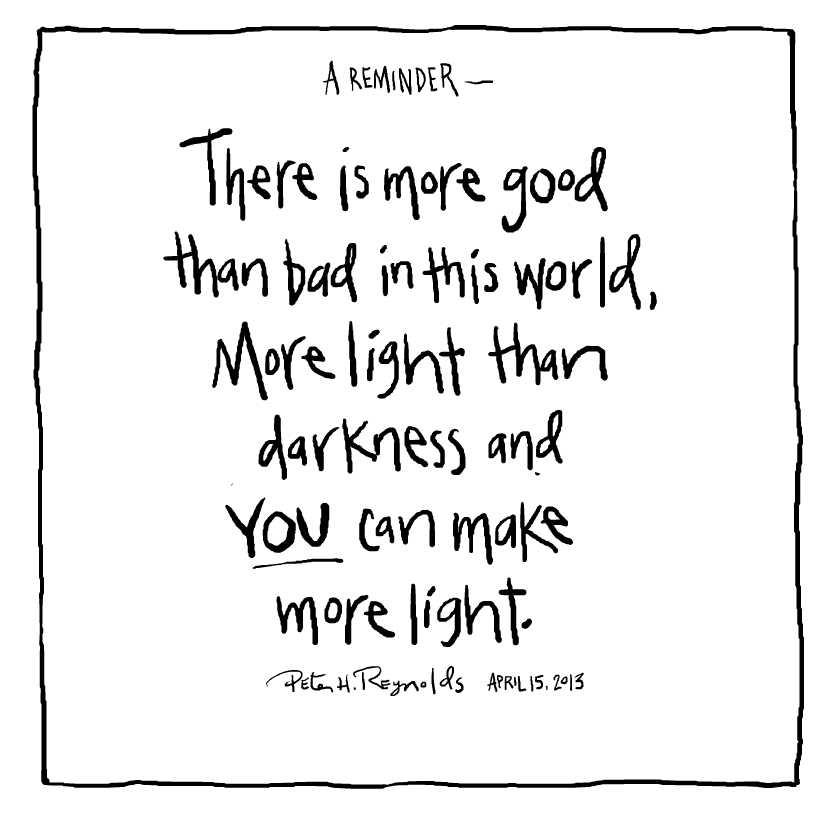
Spread More Light

As I reflect on the events of the last week here in Massachusetts, I feel heavy. Just heavy and sad. I feel the weight of the sadness so many victims and their families now face. The immense and unbearable grief. The beautiful lives lost. The shattered dreams. The long road back to a life that will never be the same. A life faced missing a limb, a loved one, or faith in humanity.

And this is where I experience the most heaviness. As a 19-year-old teenager was captured, my Facebook feed filled up with cries to make him suffer. To tear off his limbs, help him heal, and then kill him. To hang him from the highest post.

These comments frighten me. Of course I understand the anger. My sister, brother-in-law, and baby niece lived just blocks from the suspects. My Alma mater was evacuated because the suspect was a student there. Campus is still closed today. Meanwhile three others were brought in for questioning just 20 minutes from my home.

But what has become of us if we meet anger and violence with more anger and violence? What happens if we don't stop to consider why a 19 year old teenager-a United States citizen-would commit such a heinous act? What have we taught our children when we spew horrible, hateful things into the world in response to horrible, hateful actions?

Of course I want justice. Of course everyone responsible should be punished. But what will be left of us when the criminals are convicted and punished?

What will become of us? Who will we be? 

Please stop the hateful rhetoric. Redirect your energy.
Be kind to your neighbors.
Hug your children and tell them you love them everyday.
Sing.
Practice random acts of kindness.
Stop texting and smile at strangers on the street.
Make art.
Get off Facebook and meet a friend for coffee in person.
Take a walk in nature.
Deliver a hot meal to a shut-in.
Do whatever positive act feels right to you.

Stop the violence.
Stop the hating.
Spread more light.

Our world needs you.
From Peter H. Reynolds

If you agree, please help spread the word by sharing this post. 

Friday, April 19, 2013

Please Find Some Quiet Today and This Weekend

As we all struggle to process the news unfolding in my home state right now, I strongly encourage all of you who are able to get outside. If possible, get out in nature. Take your kids. Take a break from the scariness, the constant noise about these horrible events.

Run free. Let the wind hit your face. Forget about the horribleness for a while.

I just returned from a walk in the woods. I even got rained on. I had to disconnect from the constant news stream. I'm still reeling like everyone else, but I feel better equipped to manage my emotions.

Friends in the Boston area, we are thinking of you and hoping that you, too, will be able to find some peace this weekend.