Friday, March 30, 2012

Richard Louv in New Bedford, Massachusetts

Last night, I had the pleasure of seeing Richard Louv, author of Last Child in the Woods and The Nature Principal speak at Tifereth Israel in New Bedford. I've quoted Louv here before and strongly encourage you to read his books and check out the Children & Nature Network if you haven't already done so.


Louv had much to say in a little time but I'd like to share some of the highlights.

He wishes there were another word he could use besides "sustainability" to describe what he believes we need to do to keep nature alive and well. He feels sustainability implies stasis- maintaining things as they are. We need to do more. Conservation is no longer enough. We need to create new habitats for ourselves and for other species by re-imagining where we live. We also need to paint a positive picture of a hopeful future.

When Louv gave a talk for a group of students a while back, a young woman stood up and asked him to describe that hopeful future because she "couldn't see it." He did his best to answer. That night he worked his ideas out more and wrote an 800 word essay response.  (It will appear in the paperback version of The Nature Principle). He read it to us last night. There was no way I could get it all down, but here are a few points that really jumped out at me.

Imagine a society in which...

  • the point of education is not rote and drill learning but wonder and awe.
  • natural history is as important as human history.
  • connection to the natural world is seen as a human right.

He further gave us this question to ponder: What would it be like to live in a society that spends as much time in nature as with technology?

Toward the end he offered basic suggestions for ways all humans can reconnect with nature and create new natural places.

The simplest thing you can do right now is plant native species in your yard, rooftop garden, vacant lot next door, etc. Louv and his wife did this in their yard in San Diego to attract native species of butterflies and birds. The great part is, native species are just that- native- so they will thrive exactly where you live with little intervention from you. You don't need to have a "green thumb" to do this. Visit your local, independently owned garden center and ask for advice (not a big box home center). They'll usually be able to advise you. Some nurseries even specialize in native species.

Louv's wife had the idea that instead of giving a little jar of jam to her neighbors each holiday season they'd give neighbors a native plant. Then maybe the neighbors will do the same and soon enough they will have created a wildlife corridor right through their neighborhood, through private land.

We don't need government to act. We just need to act. Through this action, your children will see that they have the power to bring back nature.

Many thanks to the Southcoast Outdoor Network for bringing Louv to our neck of the woods and to Tifereth Israel for hosting. Louv is keeping a busy travel schedule these days so he just might turn up in your hometown. If he does, please make time to go see him.

Related Posts:
Loose Parts Play
Loose Parts Play, Part 2
Loose Parts Play, Part 3
Gardening Without a Yard
Reading the Land

Tuesday, March 27, 2012

Travel Tuesdays: Herring Are Running!

I hope my regular Travel Tuesday readers don't mind one more day of diversion... I just have to post about something that's happening right now. If you live in Southeastern Massachusetts or on Cape Cod, try to get to a herring run. I've been watching this annually since I was a kid. It's still quite amazing!

Take a look. Can you see how the water is "boiling" with herring (fish that are also called alewives)? Look at those fins sticking up!

                                    
They're all swimming upstream, against the river, to reproduce!

Here's the river. Instead of going up that waterfall, they'll go up the man-made fish ladder that starts on the left side of the picture.

Here's the ladder. It gradually rises to water level on the other side of the road the river passes beneath.

These fish successfully made it over this step. It's not unusual, however, to see fish fall back as they get tired from swimming so hard.

Once they get over a step, they can rest a bit on the edges of the ladder where the water doesn't flow as fast.


Here's a video I shot yesterday. It's a bit hard to see, but you can get a feel for how many fish are there.


I sure am glad that traveling isn't as hard for me as it is for these fish!

Have you noticed any new animals migrating in your area? Many songbirds have appeared in our area over the last few weeks. How about you?

You might also like::
Travel Tuesdays: Wood Frogs Are Traveling
Travel Tuesdays: Consider the Health of Our Planet

Friday, March 23, 2012

Lyme Disease Prevention

Since I promote outdoor activities so heavily, I also like to stop now and then to remind folks of some basic heath and safety issues.

Today, a reminder to take precautions against insect-borne diseases. This time of year, in my neck of the woods, the most pressing concern is Lyme disease, which is carried by deer ticks. Experts warn that this year (in the northeastern part of the U.S.) could be a particularly bad year for the disease. The reason: a bumper crop of acorns lead to an overabundance of a particular kind of mouse that is a deer tick host.

The best way to prevent the disease is to take precautions. Wear light-colored long pants and long-sleeved shirts. If possible, tuck your pants into light colored socks. Then spray your clothes with bug spray. (Follow directions on the package). When you return indoors, remove your clothes and check your body for ticks. It's always wise to enlist a family member to help check places you can't easily see such as behind your knees. Deer tick nymphs are really small (like the size of a poppy seed) so check carefully. If you have dark skin, sweeping a flashlight across your skin, CSI style, may help.

I'm not a medical person, so ALWAYS listen to your own doctor, but here are some facts from my kids' Pediatrician:

  1. A deer tick needs to be embedded in your skin for a minimum of 36 hours (probably more like 48 hours) for you to get the disease from an INFECTED tick.
  2. Obviously, not all ticks are infected. 
  3. So... if you find one on you or your kids, don't panic. 
  4. If the tick is "free," simply remove it and flush it.
  5. It the tick is "in," you need to remove it carefully without leaving the head inside. The method that works best for us is one I learned from my child's pediatrician, but again, ask your doctor for advice. Using a wet, soapy cotton ball, make small counterclockwise circles over the tick without lifting the cotton ball. It can take a few minutes, but the tick will come out. Flush it down the toilet. 
  6. Clean the site, then apply antibiotic ointment and a bandage.
  7. If the tick is in a tricky place, such as the ear, having a doctor remove it may be advisable. Check with your doctor.
Please don't let fear of ticks keep you indoors. With these precautions, the risk of infection is minimal. 

In other parts of the world, different diseases and insects are of concern. Learn how to stay safe in your part of the world.

How do you protect your family from insect-borne diseases?

Related Posts:
Mystery Rash (Poison Ivy)
Insect Safety (This post, written last year, goes into more detail and provides links to more info).

Wednesday, March 21, 2012

Tuesday, March 20, 2012

Travel Tuesdays: A World of Beauty, Charm, and Adventure

My reflection and a submerged frog.
As you know, I've been totally immersed in the wood frog migration around here. I haven't been traveling anywhere far- just hiking the mile and a half round trip from my house to watch those frogs do their thing. Truthfully, I've gotten behind in my blog schedule because I've been so invested in observing and photographing the frogs.

Today, I even saw an otter. An otter! That's the first time I've seen one in that pond, though my dad said he saw one there about 20 years ago.

Usually I prepare my "Travel Tuesdays" posts in advance and schedule them to post automatically. Alas, I have nothing in the queue today. I was feeling guilty about it- I have a blog and a schedule to follow, after all. Then I thought of it this way... aren't I doing exactly what I'm encouraging you to do with your kids? Get outside! See the world! Connect with nature!

And so, I won't share any travel adventure stories today. Instead, here's a travel quotation that fits with my wood frog excursions:


“We live in a wonderful world that is full of beauty, charm and adventure. There is no end to the adventures we can have if only we seek them with our eyes open.” – Jawaharlal Nehru 1889-1964


Boy have my eyes been open this week! (And my ears. And my nose.) If the wood frog migration eventually settles down, I'll be back with a regular Travel Tuesdays post next week. If not, you might need to send a search party out to find me.

What nature adventures have you had this week? The weather in the Northeast has been amazing. How about in your little corner of the world?


Related Posts:
Travel Tuesdays: Wood Frogs are Traveling
Travel Tuesdays: Mark Twain Quotation
Travel Tuesdays: Be A Traveler in Your Hometown or State

Friday, March 16, 2012

Signs of Spring

Spring has sprung here in Southeastern Massachusetts. The signs are everywhere.
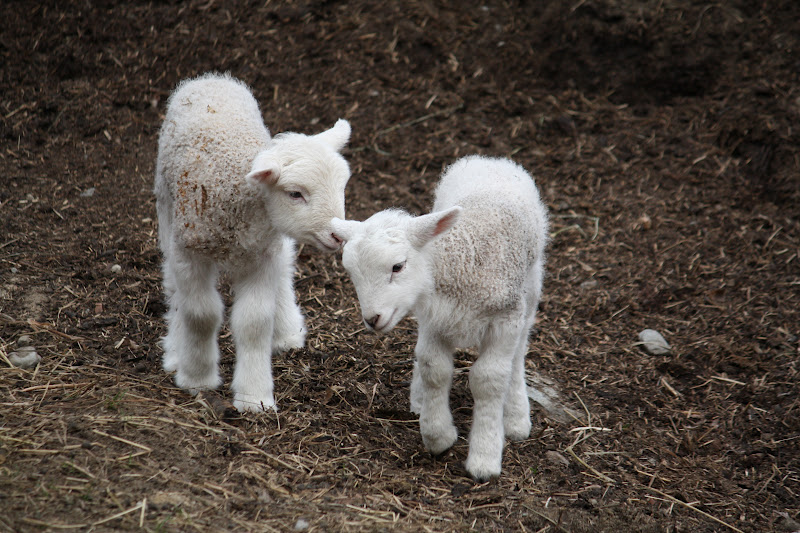
Here are a few from my parents' farm taken this morning:


Have you gotten outside lately? What's happening in your neck of the woods?